Good Evening, Class!

Welcome Students, Parents, Alumni (and the NSA)! I don't just work from 6:45 a.m. to 3:00 p.m. I'm apt to be thinking about something for class at any time of the day or night. So I decided to start "THS After Hours" as a way of extending our day. If you're new at the blog, the most recent entries are at the top of the page, and they get older and older as you go down the page. Just like archaeology.

Tuesday, February 23, 2010

Route 66 -- The Mother Road

Well, of course this is the road used by the Joads on their trip to California. It was the main road then, and it no longer exists now -- it was officially "decommissioned" in the 1980's. But it lives on -- in people's hearts, on the internet, and in stretches of highway -- some still used, some forgotten and decaying.

Here is one site that gives a good quick history of "The Main Street of America". Here's an excellent one from the National Park Service. And there are plenty of others.

Here's one: Ghost Towns of Route 66. Once the interstates came through, they sucked what lifeblood remained from the small western towns.

How about Route 66 in postcards?

One website will give you a Route 66 slideshow.

Route 66 even has a song written about it. You can watch it performed by Nat King Cole here, or watch the Rolling Stones cover it here.

There was even a tv show about Route 66 in the early '60's: "Two young men drive around the US in a now vintage Corvette, working at odd jobs, helping people, and searching for adventure. Ironically, the show was filmed on location all across the USA, but rarely near the real Route 66."

And this I did not know until just now: it is a cultural treasure akin the ruins of Pompei, the Andean city of Machu Pichu, as judged by the World Monuments Watch, which focuses global attention on cultural heritage sites around the world in dire need of preservation.

Sunday, February 21, 2010

Life is What Happens While. . .

you're busy making other plans.

That's what John Lennon said, and it's a saying that I often quote.

Here's an example, from today's New York Times -- (the obituary section, unfortunately).
Georgelle Hirliman, ‘Writer in the Window,’With Answers, Is Dead at 73

Georgelle Hirliman, whose innovative solution to writer’s block a quarter-century ago gave her a national career as a performance artist — and a book to boot — died on Jan. 29 in Santa Fe, N.M. She was 73 and a Santa Fe resident.

The cause was cancer, said Devon Ludlow, a longtime friend.

In 1984, hopelessly blocked on a novel, Ms. Hirliman hit on the idea of setting up shop with her typewriter in a Santa Fe storefront. Beside her, she placed a sign:

Help Me Cure My Writer’s Block — Give Me a Topic.

People stopped and stared. Before long they began scribbling questions on slips of paper and taping them to the window. (Q. Where do the ducks go when ponds freeze over?) Ms. Hirliman fired off brief, aphoristic replies and taped them back up for all to see. (A. Warm, chlorinated pools in Miami and Beverly Hills.)

She never wrote her novel, but it no longer mattered: Ms. Hirliman was soon appearing in windows across the United States and Canada, her work widely reported in the news media.

In Manhattan she wrote in the windows of The Village Voice, Shakespeare & Co. on the Upper West Side and B. Dalton on Fifth Avenue, among other places, sitting daily for eight hours at a stretch. Store owners paid her $50 to $100 a day, New York magazine reported in 1985.
As Bugs Bunny used to sometimes lament: "It's a living."

(Extra credit if you can tell me the literary reference embedded above.)

Saturday, February 20, 2010

What Scarlet Letter?

I assume you all know who this is. But how about

this guy? What could they possibly have in common?


The first guy, as you probably know, is the golfer Tiger Woods. He's won a lot of golf tournaments and hence a lot of money. And, as you probably also know, he recently had a nasty spat with his wife over his (repeated) infidelity. This past Friday, February 19, 2010, he made his first public statement regarding the matter.

To Robert Stein, this all looked familiar.
His pillory a golf-clubhouse lectern, America's most famous athlete staged his own public humiliation yesterday for a TV camera, the 21st century equivalent of donning the scarlet "A" for a bloodthirsty Puritan crowd.
Now if you're one of my current seniors, and you had Ivy Morrison as your teacher last year, you know what he's talking about: Chapter 1 of Nathaniel Hawthorne's The Scarlet Letter. Hester Prynne emerges from prison. Before she can take up her place in society, she must subject herself to an hour of public humiliation, standing before the good citizens of Boston town, wearing the symbol of her shame (adultery) on her breast -- the scarlet letter A.

It may be true, that, to a sensitive observer, there was something exquisitely painful in it. Her attire, which, indeed, she had wrought for the occasion, in prison, and had modelled much after her own fancy, seemed to express the attitude of her spirit, the desperate recklessness of her mood, by its wild and picturesque peculiarity. But the point which drew all eyes, and, as it were, transfigured the wearer,—so that both men and women, who had been familiarly acquainted with Hester Prynne, were now impressed as if they beheld her for the first time,—was that SCARLET LETTER, so fantastically embroidered and illuminated upon her bosom. It had the effect of a spell, taking her out of the ordinary relations with humanity, and inclosing her in a sphere by herself.
“She hath good skill at her needle, that’s certain,” remarked one of the female spectators; “but did ever a woman, before this brazen hussy, contrive such a way of showing it! Why, gossips, what is it but to laugh in the faces of our godly magistrates, and make a pride out of what they, worthy gentlemen, meant for a punishment?”
“It were well,” muttered the most iron-visaged of the old dames, “if we stripped Madam Hester’s rich gown off her dainty shoulders; and as for the red letter, which she hath stitched so curiously, I’ll bestow a rag of mine own rheumatic flannel, to make a fitter one!”
“O, peace, neighbours, peace!” whispered their youngest companion. “Do not let her hear you! Not a stitch in that embroidered letter, but she has felt it in her heart.”
But I'm not here to tell you that story. I just wanted to point out that out there are -- in the "real world" -- people who know this story. And they find it relevant 160 years after it was published.

Furthermore, they assume that their readers -- as literate, educated Americans -- will recognize the allusion. If you don't -- and it could be your boss, or a customer, or a prospective boyfriend/girlfriend -- you expose yourself as, well, someone not of the first rank.

Wednesday, February 17, 2010

All Things Fall, and Are Built Again. . .

and those that build them are gay.

That's what William Butler Yeats says, in his poem "Lapis Lazuli."

He's not talking about sexual preference; when he was writing this poem "gay" didn't have that denotation. (He doesn't mean "stupid", either. That coinage is even more recent.)

He means that when you are involved in something meaningful, creating something, there is joy in the process. The outcome is secondary, and certainly doomed anyway -- even Keats' Grecian Urn.

I was reminded of this -- I am all the time being reminded of things that the great artists have told us in the post -- a couple of weeks ago, at a place called Infinity Hall. It's an old opera house -- Mark Twain once read there -- on Route 44 in Norfolk, Connecticut. It seats about 305 people, and it's a great place to see a show. I say Greg Brown there last Friday, and he said "I almost hate coming here. [Dramatic Pause] 'Cause I know wherever I go next will be a disappointment."

Anyway, on this night it was Carrie Rodriguez playing her fiddle , with Ben Sollee and his cello (no, really) as the opening act. After they played their individual sets, they played together -- for only the second time, Carrie explained, and that they only knew each other's songs about half way through. "Pretty soon we'll learn them," she said to him, "and then it won't be fun anymore."

"It will still be fun," he said.

"Yea," Carrie agreed, "but. . ." Meaning, I think, that while the performance would be better, the joy of learning, of reacting to the music instead of just playing it -- the funnest part -- would have passed.

Though we seemed dead, we did but sleep. . .


THS Afterhours returns to the internet -- for how long, who knows? And here's what restarted it all.

Now if you're taking Honors English IV, you'll notice that there's a lot of death and grieving involved in the works we cover. (The overall subject of the course is Love, but there's a lot of death and grieving: the three are not unconnected.) We start right off with "Vincent Black Lightning 1952", and then, bang -- right into the "mortality paradox".

Kate McGarrigle died on January 18, 2010. I did not hear about it at the time. She was slightly famous, but not a celebrity. She was only 63.


Kate was part of a very musical family. She performed and recorded with her sister, Anne. Her son, Rufus, has recorded five albums and just recently completed his first opera! Her daughter, Martha, has recorded four albums, (the last covering the songs of the Little Sparrow, Edith Piaf), and four EPS. One of them, Bloody Mother F***** A *****, was dedicated to her father, Loudon Wainwright III, himself an accomplished singer and actor. (Here's part of the reason, maybe -- a song called "Hitting You".) Loudon's daughter from his second marriage (to Suzzy Roche, of the Roches -- Suzzy and her two sisters), is Lucy Wainwright Roche. Loudon's sister, Sloan Wainwright, has recorded seven albums. I may be missing one or two, but you get the point. It's a musical family.

I came across this article, from the Times of London, in which Rufus and Martha describe their recent loss. I was touched, and thought it was worth sharing.

Here are a few selections.

Rufus Wainwright

I’m in the throes of grief, which encapsulates every aspect of human behaviour. I feel extreme glee and extreme happiness mixed with fear, and I’m reconfiguring the order of things. It’s fascinating if you’re close to your mother and if she dies it’s such a kind of statement from the Universe: “You thought she was in control? Just you wait and see who’s really pulling the strings.” It’s a pretty hard time, but my family and I have come together and experienced the end of Kate’s incredible life. .

She seemed so happy: she was going to put the situation out of her mind and drink up the world to her fullest. She travelled back and forth to Europe, she saw my and Martha’s shows, she went on a grand tour of the world, she swam in lakes in the country. She was a true individual, unique.

Once the disease started to take over she didn’t want to talk about it. She didn’t change herself at all, but she did — in a subtle and mystical way — prepare for her death. She made it private. She was in a coma for two days before she died, with us but she couldn’t speak. Before she went into the coma, the last thing she said to me was: “Have a beautiful summer in Montauk,” where I had just bought a house. She told me not to cry and of course I cried. I’m still crying. I think I’ll cry every day for the rest of my life. . .

My parents loved each other very much, but along with that came a fierce love of music and when you mix those two, things can get pretty explosive. They had to ride the waves of showbusiness simultaneously, and when Martha and I joined them the waves got choppy. It was a bumpy ride, but a glorious, noteworthy voyage. The good thing was they really had a chance to settle their differences. Before Kate’s health went south my dad performed in Montreal and invited her on stage. Afterwards he told her how amazing it was to sing with her again. They made it back together, as parents of their children.
Everybody’s shook up. We’re all very devastated, but on the other hand it’s been a great trip. Now I am dealing with the repercussions. Artistically I sought my mother’s opinions about the plethora of options in creating a work of art, and when she was getting iller I had to control myself so as not to become too demanding of her. I’ve started writing something about her and I’ve found myself instantly filled with her support and encouragement. Whenever I need her she will appear. To anyone else going through this, I’d say if you need to invoke your loved one, write about them and they’ll be there.
Martha

Kate, Rufus and I saw ourselves as the three musketeers. She played a huge role in our formation and had a very hands-on approach whether we liked it or not. She had incredibly good taste and made sure we did too. She made us into the musicians we are, and influenced the music that we loved. I cooked what she did. I wore the clothes she wore. We were the same size. As a young woman I tried to distance myself from my mother. I was overwhelmed by her beauty and talent. I tried to play the independent girl. But I always came back, needing her cash, her assistance, her suggestion. In the last five years I totally gave in and realised I needed to be with her all the time.

Anna

Last summer, one evening, she turned to me and said: “How come no one will talk to me about dying?” We broke down on the couch together. Last week I asked her as she lay there what her deepest fears were and she said to me: “I’m not thinking about anything.” She was putting all the bad stuff out of her mind. Kate had spent the last year and a half lying on the couch speaking to friends by phone. A friend once went round and said “Kate you don’t have to answer the phone”, and she said, “Every call is important”.

The breakdown of Kate’s marriage to Loudon was significant — she often said that she took to her career as a reaction to it. It was hard for two musicians married, working as musicians, although she found happiness with Pat Donaldson [the bass guitarist] later.

Kate was one of the finest songwriters: her soul told her hands what to do. The song she wrote for Martha, which she performed at the Albert Hall, Proserpina, makes me cry. It’s amazing. For me, she’ll always be a contradiction: the widely read sophisticate who loved mixing with the high-end crowd with Rufus, and the rustic character, never happier than when riding an old bike, or cross-country skiing or knitting Scandinavian sweaters.

The video of Proserpina was recorded about six weeks before Kate died.

So many people in this world are into destruction. I admire those who create.


Monday, September 3, 2007

How Do You Sleep at Night?

A lot of high school students come in tired to school -- and many stay that way all day long. Well, bear in mind, it's not only the quantity of sleep that you get that matters, it's the quality, too.


And of course, since this entry has the same title as a John Lennon tune, here's a link to the song.

(The musical question is thought to be directed at Paul McCartney: that's why you'll see so many pictures of Sir Paul in the video.)

Fun with Grammar!

Although I hardly ever do this, I called out one of my students the other day on a matter of word usage. (It happens to be one that really gets to me: the difference between uninterested and disinterested.)

But here's a website that should make us all feel better about ourselves when we slip up in our grammar or our usage: even celebrities make mistakes!

Friday, August 31, 2007

Archetype v. Stereotype

Here's a link to an earlier post from last semester.

A New Year Begins. . .

so how about "Auld Lang Syne" (courtesy of Guy Lombardo and his Royal Candians).

Here's a less traditional version.

I wonder how that would sound on a tuba?

Tuesday, June 19, 2007

Now it Can Be Told! The Series is Complete!

Who’s Smarter? -- Interclass Beatdown 7!

(The Seventh and Deciding Match!)

Both classes should be proud of the knowledge they displayed over the course of the competition. But unfortunately there can be only one winner.


Geography: What nationality is a Breton?


A Breton is from Bretagne, or the province of France we know as Brittany.

Advantage, Block 2.


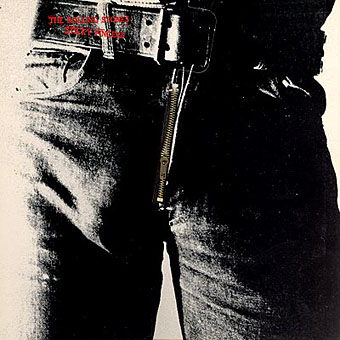
Entertainment: What runs up and down on the Rolling Stones’ Sticky Fingers album?

A zipper. Which actually zipped.

(I'm sure you're parents will remember this one. Ask'em).

This question stumped both classes.


History: What organization was founded by the Rev. Jerry Falwell?

Reverend Falwell recently passed away. He was the founder of "The Moral Majority".

His obituary for MSNBC here. Both classes might be interested, since neither was familiar with the Moral Majority.


Arts & Literature: What playwright was married to Marilyn Monroe?

Arthur Miller, author of Death of a Salesman and The Crucible. (I could have shown you Arthur Miller, but both classes know who he is, anyway.)


Science & Nature: What non-working, stingless bee mates with the queen?

The Drone Bee

The drones are the male bees in the colony. Their sole function is reproduction. Drones who succeed in mating with a queen during her nuptial flight perish in the act.

Drones are larger and heavier than the workers, but not as long as the queen. It is easy to identify a drone by its large compound eyes that come together at the top of the head.

Usually several hundred to several thousand drones are present in a colony during the active foraging season. The young drones are fed by the workers; the older drones feed themselves honey directly from the storage cells. During the season, should the food supply diminish for any reason, workers waste no time in ejecting drones from the colony. After the first heavy frosts in the fall reduce the supply of nectar and pollen, the colony preparing for winter begins to drive the drones from the hive. They soon starve to death.

Kind of like those young people who come home after college and can't seem to find a job they like, so they decide to live at home for a few years (until they're driven from the hive and they starve to death). Neither class knows much about bees, apparently.


Sports & Leisure: What do
Indianapolis 500 winners traditionally drink in the winner’s circle?

Does that look like champagne to you? No, it's milk. (Buttermilk, actually, but I will accept milk.) Why milk?

The tradition of the "500" winner drinking milk in "Victory Lane" began when Louis Meyer, the winner of the 1936 Race was photographed drinking his favorite beverage, buttermilk, after his victory. An executive of the Milk Foundation (now the American Dairy Association) saw the picture and, hoping to set a good example for kids, made sure that from that year on the winner of the Race received a bottle of milk to drink.


Children’s: What Ursula K. LeGuin novel tells of young Ged’s first
trip to the wizard’s school on Roke?

The Wizard of Earthsea, the first book in the Earthsea Trilogy.

(There's more in heaven and earth than Harry Potter, Horatio.)


Classics: What reclusive novelist published nine short stories in 1953 under the enigmatic title Nine Stories?

J. D. Salinger. (Advantage, Block 2)

Non-fiction: What best-selling Alex Comfort how-to guide includes sections on “Ingredients”, “Appetizers”, “Main Courses”, “Sauces”, and “Venues”?

Both classes went for The Joy of Cooking. Close! (I thought perhaps somebody's parents -- or grandparents -- had a copy hidden away somewhere.)


Book Club: Whose famed paintings of “Helga” inspired Larry Watson’s novel Orchard, about a Scandinavian immigrant who becomes the muse of a local artist?

Andrew Wyeth.


Authors: What Londoner, born Richard Patrick Russ, ditched his first wife and kids to reinvent himself as an “Irish” nautical novelist?

Patrick O'Brian, author of the wildly succesful Aubrey-Maturin series, set against the Napoleonic Wars. (Maybe you saw Rusell Crowe play "Lucky Jack" Aubrey in Master and Commander.

Book Bag: What government position did Jack Ryan hold at the start of Tom Clancy’s 1994 Debt of Honor?

National Secuirty Advisor. (Formerly Condoleezza Rice, now Stephen Hadley.)


In Case of a Tie

(The first correct, unmatched answer wins.)

Entertainment: What was “another sleepy, dusty delta day” in “Ode to Billy Joe”?

June 3rd. Here are the lyrics. Here's Bobbie herself , apparently from The Smothers Brother's Comedy Hour.

Check out some of the comments:

You don't see any Bobbie Gentry's around these days in the music industry. ALL WOMAN with REAL TALENT!
If you don't get chills listening to this song, check for a pulse. Still a classic.

Arts & Literature: What was the name of Captain Bligh’s ship?

The Bounty, as in Mutiny on the Bounty. Charles Laughton played Bligh to Clark Gables's Fletcher Christian (1935); Trevor Howard was Bligh to Marlon Brando's Christian in 1962, and our old friend Anthony Hopkins was Captain Bligh to Mel Gibson as Christian in 1984. Of course, it's all based on a true story.

Non-fiction: Who penned the bestseller Undaunted Courage about the Lewis and Clark Expedition?

Stephen Ambrose. (I know for a fact that some of your parents have this on your shelves at home -- I know I do.)

Authors: What San Francisco novelist insists his name is real, despite its suspicious anagram “is a man I dreamt up”?

You'd have to be a pretty good anagrammist to come up with Armistead Maupin. Maupin has been called "the gay Charles Dickens". (Well, sort of.)